Published - Tue, 25 Aug 2026
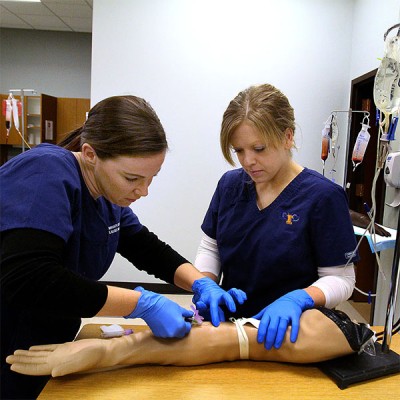
At EKG Technician School & Patient Care Technician Program in Dallas, TX, you'll discover the essentials needed to kick off a healthcare career.
Two of the quickest ways to enter healthcare jobs in Dallas – Fort Worth are EKG (electrocardiograph) tech jobs and patient care technician (PCT) positions. Whether you've been looking for an ekg technician school, comparing various options for becoming an ekg technician, researching a Patient-Care Technician Program, or simply Googling "patient care technician training near me" this guide will cover all of the information you need to know before you enroll — so you know what you're signing up for, how long it takes to train, the cost, and how to pick a school that will help you get a job.
Why Dallas Is a Strong Market for EKG and PCT Careers
All healthcare facilities in Texas, including hospitals, outpatient cardiology clinics, urgent care centers, and long-term care facilities, are vying for qualified support staff. In addition, there is an abundance of hospital systems, cardiac care centers, and skilled nursing facilities in Dallas, ensuring a steady demand for entry-level clinical jobs without a four-year degree. These include the roles of EKG technicians and patient care technicians, both of which do not require a lengthy training course and can be completed in a matter of weeks, rather than years.
How Dallas Career Institute Solutions These Two Programs
Dallas Career Institute, a Dallas, TX career school, bases the EKG Technician course and Patient-Care-Technician Program on the points listed above. The school's program description states that students in the EKG Technician course will be prepared to take the Certified EKG Technician (CET) exam offered by the National Healthcare Association and will receive national exam study materials, a national practice exam, national exam certification with immediate proof, and job placement assistance in a compact 1-2 week program.
Patient Care Technician Job Description and Duties
A Patient-Care-Technician Program entails much more than an EKG program. PCTs are also trained as nurses, and because of their multifaceted training, generally operate at a higher level than certified nursing assistants (CNAs) and below licensed vocational nurses (LVNs).
Patient care technicians learn how to:
Support nurses in ensuring the comfort, safety, and good health of their patients during their working hours
Provide direct hands-on care to patients in hospitals, clinics, and long-term care facilities.
Assist with taking and recording vital signs
Assist in transporting and transferring patients, such as moving from bed to wheelchair and exam table to bed
Carry out basic diagnostic and phlebotomy tasks as per the program curriculum
Assist the rest of the clinical staff with documentation and patient comfort
A Patient Care Technician Program usually offers all three of these services: nurse aide, phlebotomy, and EKG, so the person who has finished the course may be more flexible in their employment opportunities than a person that only completed a nurse aide course.
What Does an EKG Technician (ECG Technician) do?
The terms "EKG technician" and "ecg technician" are both variations of the same position: EKG is the German spelling of the term (Elektrokardiogramm), and ECG is the English spelling of the term. They play a crucial role in hospitals, cardiology clinics, and diagnostic imaging facilities.
Each day this person will be expected to:
Taking patients for diagnostic testing on an electrocardiograph machine
Ensuring that the patient's blood pressure and other vital signs are measured during testing.
Gathering health information that doctors and cardiologists use to determine cardiovascular health.
Running tests that assist in assessing a patient's heart rhythm and his or her general heart health
Setting up patients for testing, interpreting procedures, and getting electrodes to the right spots
Running and calibrating EKG equipment
The training for EKG technicians tends to be one of the shortest healthcare certificate program courses, usually lasting a couple of weeks of intensive, hands-on instruction without requiring years of schooling.
Finding "Patient Care Technician Training Near Me" in Dallas: Practical Tips
If you have ended up on this website by typing patient care technician training near me, this is how you can streamline your search efficiently:
Verify program duration with your timeline. If you must begin your work quickly, a shorter program with just an EKG instead of a full PCT program may be more appropriate as a first step, followed by a more comprehensive program later.
Inquire about externship or clinical hours. Job-readiness and confidence is greatly enhanced by real-world clinical exposure, regardless of its length.
Consider the total cost, not the tuition. Inquire if they include or charge for scrubs, exam fees, background checks, and certification exam fees.
Check class timetables. If you have a job, you can make it realistic to train in the morning and evening sessions.
Check accreditation and exam eligibility. Make sure that the school's certificate of completion does indeed lead to a national certification exam.
Check out new reviews and placement results. Programs that have been around for a while and that have good feedback, whether from current students or recent graduates, are more likely to be a reliable option than those with little feedback or feedback that is old.
EKG Technician School in Dallas
For those seeking to embark on the healthcare field in a short amount of time with hands-on experience, an EKG-technician school may be a great option. The EKG technician program at Dallas Career Institute teaches necessary skills in performing electrocardiogram tests, positioning the leads, observing heart function, interpreting the results for doctors and helping to keep patients calm and safe. Medical terminology, heart anatomy and physiology, Holter monitoring, stress testing, and patient care are other critical areas of training. Low-cost, flexible class options, and a program that helps students gain confidence and start preparing for careers in hospitals, clinics, and health care environments.
Career Outlook: What Comes After Training
Students who complete EKG technician training often seek work in a hospital cardiology department, an outpatient diagnostic facility, or a doctor's office that has on-site cardiac testing equipment. Patients Care Technician Program graduates can enter the workforce in a variety of ways, such as medical/surgical units of hospitals, long-term care and rehabilitation centers, dialysis, and outpatient clinics.
Because of the experience gained with patients and the hands-on approach to healthcare training that both EKG and PCT provide, many graduates pursue further education in healthcare, such as phlebotomy, medical assisting, or ultimately, nursing, from either of these credentials.
Conclusion
It doesn't need to be a question of whether to select an EKG-technician school or a complete Patient-Care Technician Program. Both are viable healthcare career pathways that lead to real-world career opportunities and are available in a fraction of the time of a traditional nursing degree in Dallas, TX. Both options can depend on your time schedule, budget, and desired broad clinical skill set before entering the workforce.
EKG technician training provides one of the quickest ways to get into a job that pays in the healthcare field, needing only one to two weeks of training. When it comes to a more comprehensive foundation that provides access to a range of opportunities across hospital departments, long-term care, and outpatient clinics, a Patient-Care Technician Program may be a better use of your time. If you aren't certain, many students opt to take both the PCT training and the EKG certification as an efficient, quick add-on.
Dallas Career Institute
9441 LBJ Freeway, Suite 300
Dallas, TX 75243
Website: https://dcitx.net/
Contact numbers
Tel: 214-691-0555
Fax: 469-480-1967
Email address
school@dallascareerinstitute.net
Created by

Comments (0)
Search
Popular categories
Phlebotomy Classes
4Medical Assistant
4Pharmacy Technician
3Nurse Aide Training
3Patient Care Technician
1Latest blogs
Looking to Build Healthcare Skills With Medical Assistant Training?
Wed, 23 Sep 2026

Dallas Career Institute
Thu, 27 Aug 2026
At EKG Technician School & Patient Care Technician Program in Dallas, TX, you'll discover the essentials needed to kick off a healthcare career.
Tue, 25 Aug 2026
Write a public review